





- Posted by:
- Posted on:
- Category:
BlogBlog - System:
Unknown - Price:
USD 0
The Rideshare Stimulator AI fiasco almost, but not quite came to a close today when writer Stella Sacco shared that she had received a private message from Saber Interactive CEO Matthew Karch, who apologized for his hurtful comments to the press regarding her employment and capabilities.
In a separate post on LinkedIn, Karch reflected on the controversy and seemingly alluded to his personal contact with Sacco. But he also couldn’t resist taking a swipe at Portal writer Chet Faliszek, who has publicly criticized Karch for his actions—most notably in the form of a 26-minute vlog on YouTube.
The briefest of recaps if you haven’t been paying attention (bless you):
Latest Videos FromPC Gamer
- Saber Interactive releases a trailer for Rideshare Stimulator, a mundane job sim where you play a cabbie.
- Writer Stella Sacco claims to have worked on the game before getting fired, her workload then taken over by an LLM.
- Saber’s official statement on the matter admitted to AI use in Rideshare Stimulator, but denied that any writers were replaced wholesale by AI tools.
- Saber CEO Matt Karch supplied his own statement to This Week in Video Games, belittling Sacco’s competency, asserting that she was not replaced by an LLM, but also that “I would frankly in retrospect have been happy to replace her with AI.”
Today, Sacco shared a post to Bluesky saying she had been messaged by Karch, and that “he apologized unreservedly for the way he spoke about me in the press.” While Sacco noted that she and Karch remained opposed in their personal stances on the use of AI, she concluded that, “Apologies are simply in too short supply these days to spurn one when it’s offered.”
Great. Awesome. That’d have been a wonderful place to end things. But Karch also shared his own further statement on the matter to LinkedIn. Karch did not mention Sacco by name, but mostly reflected on his experience, particularly the negative consequences of responding to a feeling of personal insult with a public statement. Karch also noted that he is sticking to his guns when it comes to deploying generative AI in games.
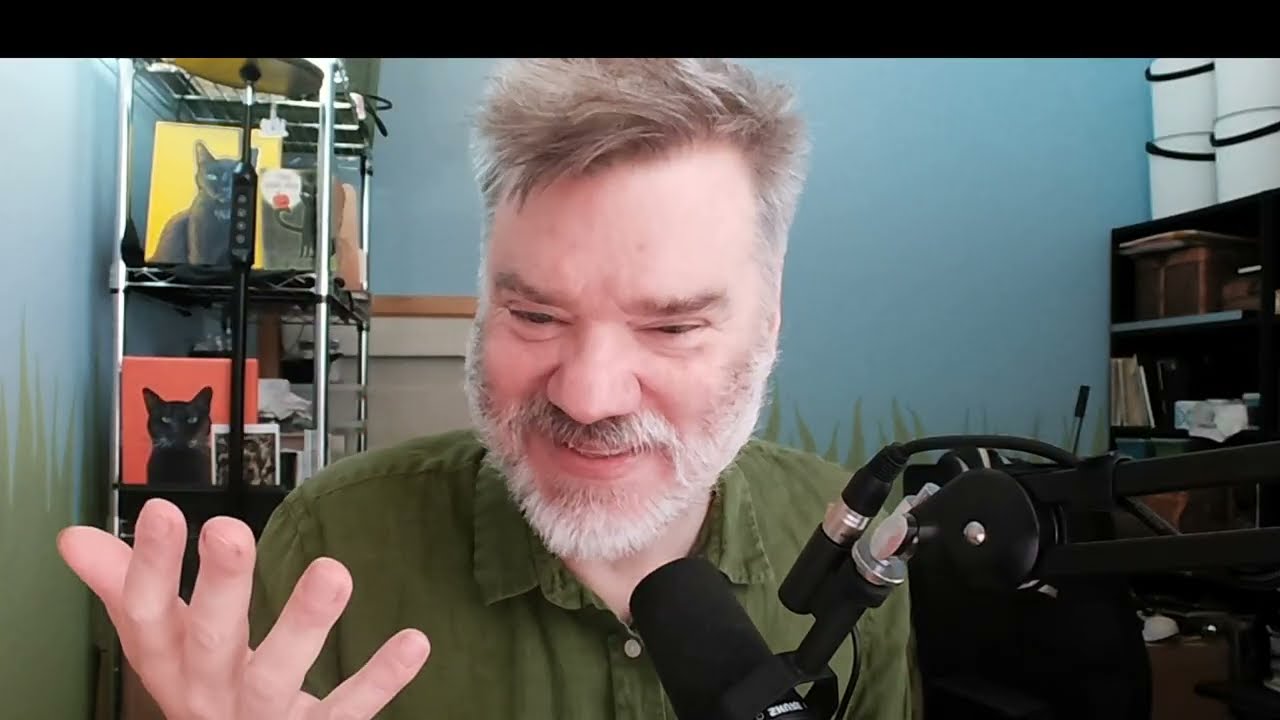
“Resolve issues human-to-human,” Karch wrote, seemingly alluding to the apology Sacco received from him. “Escalating disputes through media channels or public statements rarely solves anything. Real resolution happens through direct, personal connection. If you cross a line, own it directly with the person involved.”
But Karch’s fourth paragraph in the post threw us for a loop. “The digital ecosystem thrives on outrage and surface-level takes,” Karch wrote. “Case in point: a 26-minute video essay from an unsuccessful writer dedicated entirely to analyzing a single sarcastic quote of mine and pretending he knew exactly who I am—which somehow concluded with personal remarks about my physical anatomy and encouragement to accost me.
“When ‘industry analysis’ devolves into personal insults and threats, it says far more about the creator than it does about the subject. Relying on outrage algorithms for industry insights is a trap.”
PC Gamer’s top news hound, Andy Chalk, clocked that this could only be referring to an August 14 video shared by Chet Faliszek, a veteran writer whose credits include Portal, Left 4 Dead, and the Half-Life Episodes. The video in question, “Who is the CEO of Saber Interactive?” is 26 minutes and 13 seconds long, and Faliszek repeatedly states that Karch’s behavior is compensating for something. Faliszek also says to viewers that, if they encountered Karch at an industry event, they should “make fun of him.”
To be fair to Karch: Faliszek does repeatedly mock and insult him over the course of the video, going so far as to extrapolate that he has a domineering character, and that his actions are, at least in part, meant to discipline and control employees at Saber. I can see a certain tit-for-tat fairness to getting back at the person who said that.
But also: Faliszek’s primary argument in the video is that, separate from Karch’s personal character or the ethics of Sacco’s original treatment, Karch’s statement to This Week in Video Games was a completely avoidable PR and marketing catastrophe that worsened the controversy.
Karch’s own conclusion in the same LinkedIn post where he took a jab at Faliszek was that he should have not said anything and left it to the communication team. At the time of writing, Faliszek’s video is coming up on 4,000 views—small potatoes.
Karch ignored Faliszek’s and his own advice and escalated again—right as things were calming down—by providing so much identifying information about Faliszek’s video. He effectively expanded the story to “Saber CEO vs. Portal writer” in a way I am now professionally obligated to make note of.


